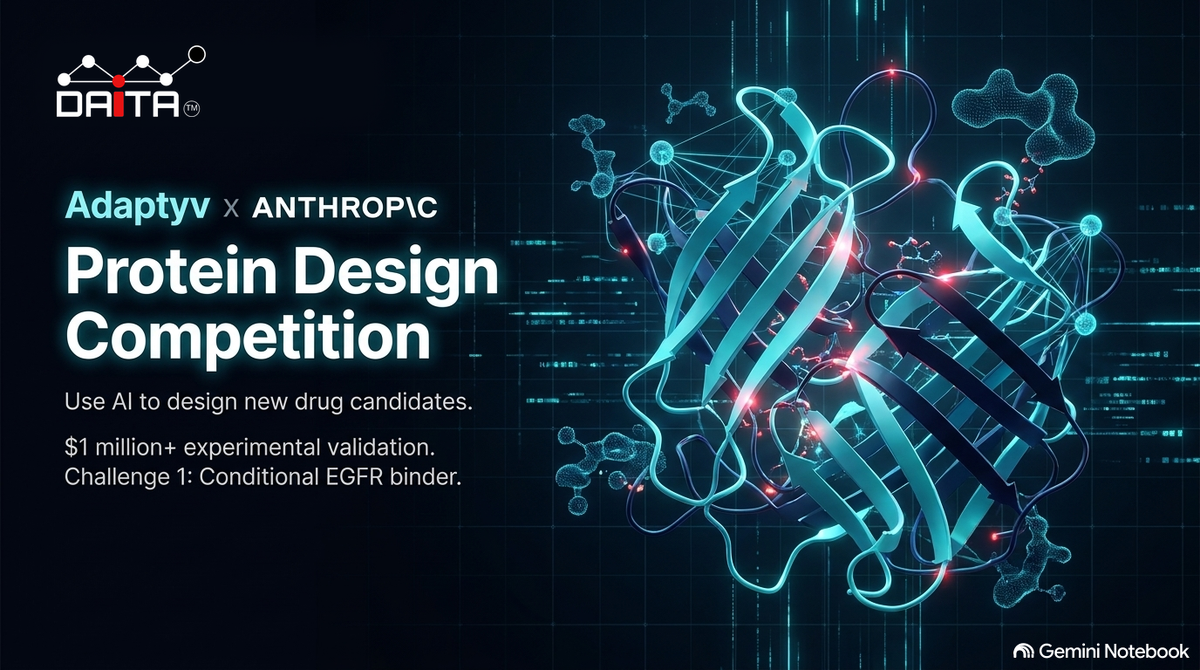
After a week of work, many GPU hours, and several iterations refining our agentic AI workflow, we submitted our final three candidates today for the Anthropic × Adaptyv Protein Design Competition.
The main challenge of the compitition:
Design an EGFR binder that binds preferentially in the acidic tumor microenvironment (~pH 6.5), while showing little or no binding at physiological pH (~7.4) — and works against both human and mouse EGFR.
Our workflow included:
• 23 initial binders — 12 VHHs + 11 miniproteins
• 22 histidine-engineered variants for pH-sensitive binding
• Multiple rounds of structure prediction, binding assessment, and pH-switch evaluation
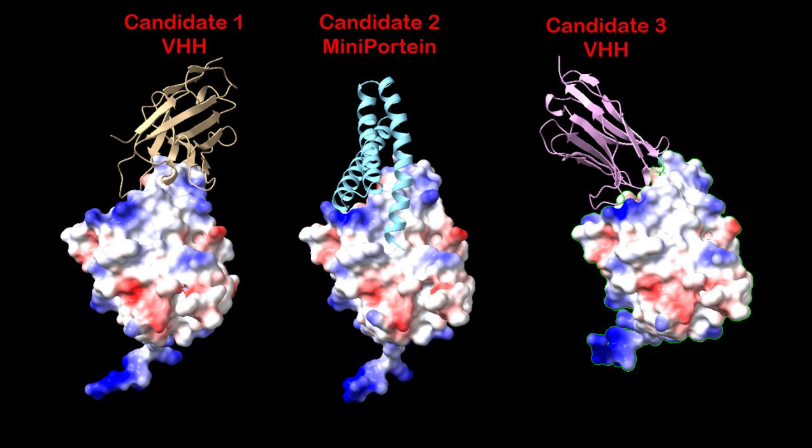
• Final down-selection to 3 candidates
A few lessons learned:
🔹 Current structure prediction models don't directly account for pH.
🔹 Histidine remains one of the most practical residues for engineering pH-dependent binding.
🔹 High-confidence structures don't always translate into strong binding interfaces.
🔹 Protein design is both a science and an optimization problem.
What excites me most is not just the three final candidates, but the workflow we are building through a real-world protein design challenge.
Every iteration helps us improve how our AI agents generate, evaluate, optimize, and down-select protein designs.
At WeDaita, we're building not only a Target Intelligence Engine to identify and prioritize therapeutic targets, but also a Drug Intelligence Engine to help design modality-optimized therapeutics against those targets.
The visualization below shows the three best candidates we submitted.
Share this article:
Related Articles
Latest News
The second Anthropic × Adaptyv protein …
3 days, 12 hours agoAnthropic × Adaptyv Protein Design Competition
1 week, 2 days agoWeDaita v2.12.0 is live
1 week, 2 days agoWeDaita v2.11.0 is live
3 weeks, 3 days agoWeDaita v2.10.0 is live
1 month agoSubscribe to WeDaita News
Get notified about important company updates, product launches, and announcements directly to your inbox.